








Starting watercolour can feel like being handed an enormous list of rules and requirements, none of which make total sense. One tutor says this thing, then another one says the complete opposite. Queue the self-doubt spiral and overspending at the art store.
Am I using the right brush? Is this paint good enough? Should I be able to draw first? Why doesn't mine look like the tutorial? Am I using too much water? Too little water? Is there some secret everyone else knows?
Take a deep breath, we have all been there. After teaching watercolour for ten years, I've seen the same worries come up again and again. And quite a few of them really aren't worth worrying about.
1. Making your painting look exactly like the reference

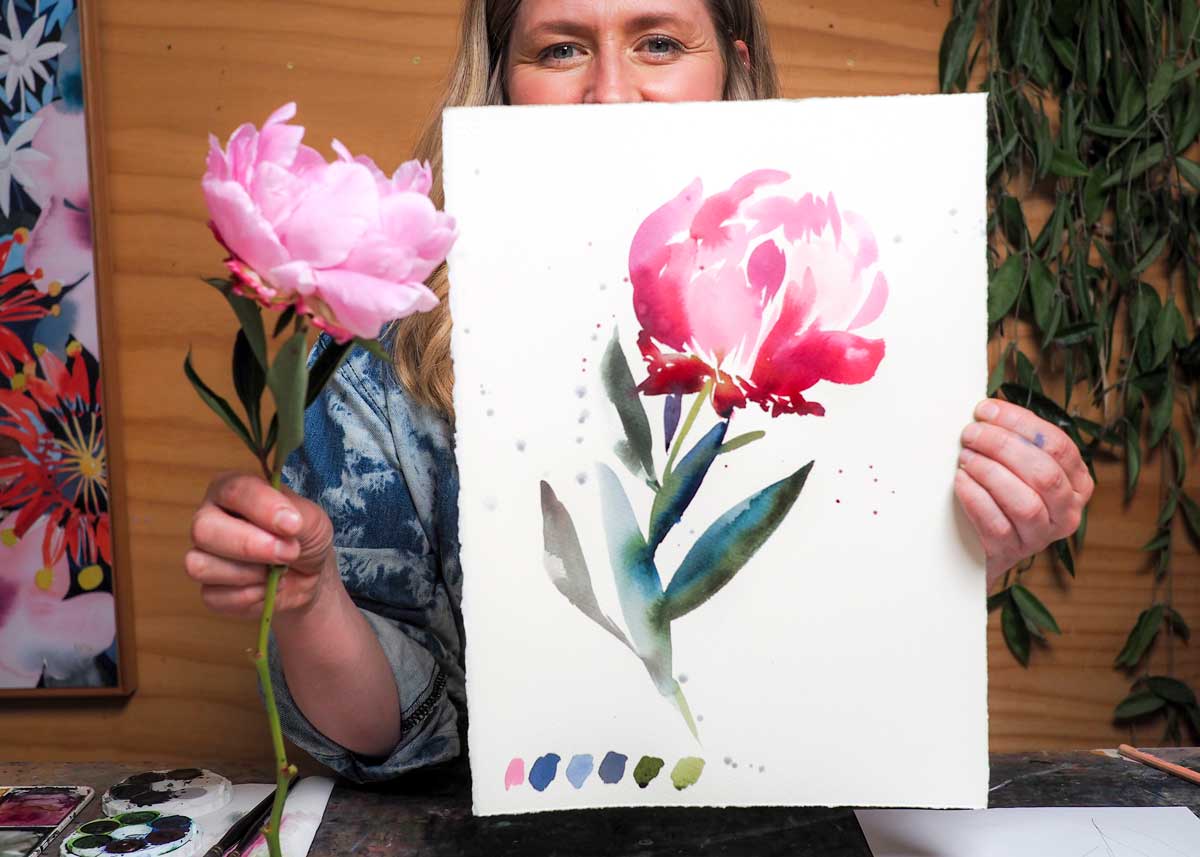
Your reference is information, not an instruction manual. It’s something to spark curiosity and excitement to paint, it’s not something to follow paint-by-numbers style. You can leave things out. Move things around. Change the colours. Exaggerate something you love. Combine it with another reference.
This is a seriously empowering realisation, a whole new world of possibility opens up when you can let a reference be a reference. Nothing more than that.
2. Staying inside the lines

Watercolour is a wonderfully fluid medium. Let it wander. A wonky edge, unexpected bloom or bit of colour escaping your pencil line isn't necessarily a mistake. Those little unpredictable moments are often what give watercolour its life.
Accidental splatter? Add some more on purpose! Then that silly splatter will look intentional and carefree. Watercolour is going to constantly challenge you to loosen up and let go. Making room for that to happen will become something you seek rather than avoid.
FYI In Welcome to Watercolour we ditch the linework altogether and let the brushwork do the talking. We often treat a sketch as gospel and get too restricted. This makes us cautious and uptight as we are painting, there’s no chance for the paint to do its magical thing it does so well.
3. Getting it right the first time

You won't. I don't.
Some paintings work. Some don't. Some start terribly and miraculously come good. Others begin beautifully and then meet an unfortunate end at the hands of one more little brushstroke.
Every painting gives you information for the next one. Don’t throw away the ones that didn’t work either, they have so many lessons to give you. I have them all in a pile in my studio, each and every failure. When I’m feeling uninspired I flick through that pile and surprisingly one of three things tend to happen:
-
I can get a surge of inspiration to paint
-
I can acknowledge how far I’ve come in my watercolour journey
-
I can pick up one that maybe wasn’t so bad - just unfinished. And get the job done.
You can’t get better without making some bad paintings.
4. Owning ALL the colours

More colours don't necessarily give you better paintings. In fact, learning with a smaller palette can teach you far more about colour than owning 48 tubes you don't really understand.
I know, I know. Those giant sets of perfect little pans all in a row are soooo tempting. So beautiful. But, trust me here. You’ll never mix a colour, you’ll only ever pick up colours directly from the palette and that is not how you get to know colour.
Fun fact: InThe Magic of Colour Mixing online course, we complete the whole course with just three tubes of paint - our primaries. This is to encourage you to learn how to mix a whole rainbow with just a handful of colours. You can mix everything from black to the sweetest, palest lolly pink to the turquoise of the ocean.
Spend all that money you saved on paint on delicious, high-quality paper. Much better spend if you ask me.
5. Making every brushstroke perfect

I'd actively encourage the opposite. Interesting paintings have variation. Big marks, tiny marks, confident ones, scratchy ones, bits that disappear and bits that demand attention. Bits that maybe didn’t go quite right, bits that went surprisingly well. Let your hand show up in your painting.
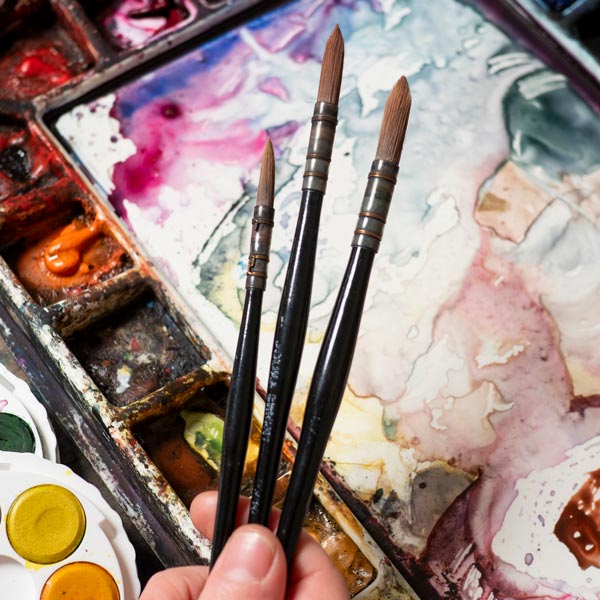
I’d really spend some time getting to know your brushes and seeing what kinds of marks it can make. Explore every little avenue one brush can provide. You might be surprised at how versatile some are. You might stumble across a whole new mark you love and adore.
Also, quick note: The sheer act of ‘perfecting’ a brushstroke can lead to very over worked creations as well. You run the brush through, it wasn’t perfect, so you do it again. And again. And again. You know where I’m going with this! The paint starts to look a bit muddy, the edges have all gone squidgy. The paper surface might start to roughen up a little. Eek! Put the paint brush down!
6. Finding your “style”

This one puts so much unnecessary pressure on beginners. Who needs that much pressure when you’re just getting started, it’ll stifle anyone’s creativity.
You don't sit down and choose a style. You paint. You notice what you like. You paint some more. You make choices. Eventually those repeated choices start looking likeyou.
It’s not just what happens at the painting table either. You might go to a gallery and get inspired, or go for a walk, visit friends, go shopping. It might be what’s in and around your home. It might be an aspirational podcast you listened to. A phone full of photos. All of it feeds your creativity. All of it comes together on the page in one way or another.
Style is an outcome, not a starting point.
7. Being naturally talented

Nobody emerges from the womb knowing the correct water-to-pigment ratio.
Watercolour involves learnable skills: water control, colour mixing, brush handling, layering, observation and eventually composition. It takes time and practice to get familiar with these. Heaps of bad paintings. Probably some tears. In saying that, you don't need to prove you're artistic before you're allowed to learn them.
If you're at the very beginning, give yourself permission to be there. We’ve all got to start somewhere. Any watercolour artist you admire started from the start and has been exactly there.
Use the good paper. Make some terrible paintings. Let the paint escape the lines. Learn what your colours can do. And most importantly: actually paint and have some fun with it.
New to watercolour? Welcome to Watercolour was made specifically to help complete beginners get started without all the overwhelm.